The Phoenix Project, Part 2

the phoenix project

By Dick Stark

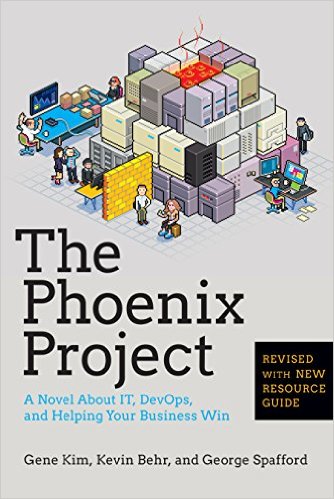
By now, many of you should have had a chance to start The Phoenix Project, a book I discussed in my last blog.  To recap, The Phoenix Project, written by Gene Kim, Kevin Behr, and George Spafford, is about a fictional auto-parts company, Parts Unlimited, with retail outlets nationwide. Since the reading assignment, I’ve heard comments like, “What a page turner,” and “this hits too close to home.” So what is the big deal and how can this benefit RightStar and our customers?

First, since RightStar became an Atlassian partner, we have now become “our customers’ expert adviser in the ITSM AND DevOps spaces.” Remember, we are not just “software guys with screw drivers.” Customers hire us not to install their Atlassian software, but to provide consulting and a solution around deploying software faster and more efficiently. According to Gene Kim, “the competitive advantage this capability creates is enormous, enabling faster feature time to market, increased customer satisfaction, market share, employee productivity, and happiness, as well as allowing organizations to win in the marketplace.” Since we became an Atlassian partner, we have noticed a significant difference in both sense of urgency and value perceived as comparted to our ITSM projects.  In just eight months we now have more than 12 new name DevOps customers.

This means that we can and will use DevOps processes and tools on our own projects, both internal and customer facing.

ITSM Projects. In December we began a Pentagon Remedy consolidation effort. For this project, we’re using agile deployment processes and Atlassian tools, JIRA and Confluence to track progress given the sense of urgency Pentagon project sponsors expect. Additionally, a new Remedy project starting in February has similar agile expectations.  We should be ready.  Our project managers are Scrum Masters, and several of our Remedy consultants are already experienced with DevOps principals and toolsets.

In addition, our development team has a full plate of development projects in store for 2016. We are working to add smart phone scanning capability to ScanStar and should have the product to market by the first of Q2. Additionally, a new release of SSO/PKI is slated for a Q2 release.

Finally, DevOps is all about getting both Operations and Development working together, under one roof. Since we have mostly ITSM customers, there is plenty of opportunity to connect both ITSM and DevOps toolsets. The Phoenix Project described three underpinning principles:

The first way is about the left-to right flow of work from Development to IT Operations.

The second is about the constant flow of fast feedback from right-to-left at all stages of the value stream.

The third way is about creating a culture that fosters two things: continual experimentation, and understanding that repetition and practice is the prerequisite to mastery.

At RightStar, we have an incredible opportunity to merge both DevOps and ITSM / ITIL principles to enable organization to be more efficient, productive, of our course, more competitive.

Posted in Atlassian, DevOps, RightStar | Tagged , , , , , , | Leave a comment

The Phoenix Project, Part 1

By Dick Stark

the phoenix project

I recently finished The Phoenix Project, and made this required reading for our entire company. It is a story about “IT, DevOps, and helping your business win.”  Who ever thought a book about IT would be a page turner? But, it is. Check it out for yourself.  Here is a short summary for those interested in the “CliffsNotes” version.

The Phoenix Project, written by Gene Kim, Kevin Behr, and George Spafford, is about a fictional auto-parts company, Parts Unlimited, with retail outlets nationwide. (Gene Kim is the former CEO of TripWire, a security management software company. Years ago TripWire focused on closed-loop change management and was a BMC technology alliance partner.)

The novel is about Bill Palmer, a recently promoted VP of IT and other company executives as they race to bring to market a new application, code named “Phoenix” which will attempt to close the gap between its arch-rival, that is “eating Parts Unlimited’s lunch.” Phoenix is a customer facing service catalog / retail site, closely integrated with its e-commerce channels. Along the way, nearly every IT calamity possible befalls the company. Here are several lessons learned.

Tribal Knowledge. Like a lot of IT departments, Parts Unlimited has a key IT engineer, Brent Geller, that is available nearly 24×7. There is no IT issue that he cannot solve. Naturally, Brent does not document anything in their incident and problem management system. This presents two significant challenges. First because nothing is documented, it appears that less work is happening, making it difficult to ask for extra resources. Second, if Brent “gets hit by a bus,” there is no documentation, especially among the many legacy applications that are still in use, and which he supports. One of Bill Palmer’s first tasks is to implement Knowledge Management.

Prioritize. A common RightStar implementation risk factor is optimization of our customers’ resources and systems. In our rush to get a project started, we often find out that the customer is not ready. Either their systems are not available or our project is not high enough in their queue. Even worse, the key stakeholders are not available during the design and planning stage of the project.

Change Management Matters. Like several customers we know, Parts Unlimited purchased a Change Management system and paid a software company and its consultants thousands of dollars to get the system up and running. After about two weeks, the company abandoned its regular CAB meetings and users stopped using the system complaining, “it is too  cumbersome and slow.”

The result: a payroll application outage thanks to a rogue security application applied without following any change processes. This was a minor incident compared to what comes next….

Stay tuned for part two in my next blog post. I’ll next discuss how Parts Unlimited came together as one cohesive team.


Posted in BMC, Business Management, DevOps, ITIL, RightStar, Uncategorized | Tagged , , , , , | 1 Comment

Why I’m Optimistic about DevOps

Jira Service Desk

By Dick Stark

Last Tuesday, I attended a webinar, Tools-Driven DevOps and Continuous Software Delivery. There, Julie Craig, research director at EMA presented the results of its latest survey-based research on DevOps and Continuous Delivery. She confirmed that DevOps is going through a growth spurt, in part due to the link between accelerated software delivery and revenue growth.  Other survey results follow.

DevOps Tool Selection. In response to the survey question, “which tool would you invest in the next 12 months,” deployment/release automation supporting continuous delivery came in first. Second place went to an application management platform or suite solution supporting DevOps and troubleshooting.

Atlassian Expert Logo

This is good news for any Altassian Expert, like RightStar.  Atlassian offers JIRA to track workflow–to do, progress, review, and done; Bitbucket as a code repository; and Bamboo to deliver JIRA from code to customer. Although there is plenty of competition among DevOps tool set vendors, Atlassian arguably has the most complete suite of tools.  But there’s more good news coming…

Tomorrow, December 10, Atlassian becomes a public company on NASDAQ. Their F-1 form reported revenues of $148.5 million, $215.1 million and $319.5 million for the fiscal years ended June 30, 2013, 2014 and 2015, working out to a CAGR of 46.7% from fiscal 2013 to fiscal 2015. “We also generated free cash flow of $47.1 million, $65.0 million and $65.5 million for the fiscal years ended June 30, 2013, 2014 and 2015, respectively,” the report noted.

Atlassian says it has more than 5 million monthly active users of its products, with 48,000 customers (which it describes as organizations that have at least one active and paid license or subscription for which they paid more than $10 per month) “across virtually every industry sector in more than 160 countries.” Some of the more high profile customers include Fitbit, PayPal, Visa, NASA, MIT, Nordstrom, Tesla, Cisco and Adobe. While the company focuses on five main products, some two-thirds of its revenues come from two: JIRA, and Confluence.

Support is feeling the impact of accelerated rates of change. In 2009, ten software deploys per day was considered fast.  Now that is considered merely average. As a result, both Operations and Development spend more time on support than ever before. Ops spends more time on application support than infrastructure support and Dev spends as much time supporting production as it does developing new apps.  (At RightStar, we spend as much time on support related issues as we do on writing code.)

RightStar is off to a good start this year with Atlassian.  I look forward to even greater growth in 2016 with an opportunity to easily double what we’ve done in 2015.  Here’s to getting Dev and Ops to work better together and all under one roof in 2016!

Posted in DevOps, RightStar, Technology Trends, Uncategorized | Tagged , , | Leave a comment

How FootPrints Does SRM and SLM

FootPrints v12

By Dick Stark

Last Thursday, RightStar presented two back-to-back e-Classes: How BMC Footprints does Service Request Management and How BMC Footprints does Service Level Management. Our objective is to educate customers and prospects how to get more value out of their ITSM toolset investments. In case you did not attend, the following summarizes the excellent training sessions.

Service Request Management. Most organizations do not recognize the role that ITSM and in particular, the IT Service Catalog plays in building value and advancing the stages of IT service delivery.  A well-designed Service Catalog can make a huge difference in customer satisfaction (how IT is perceived by users), efficiency and delivery. For example,  at the recent FUSION 15 ITSMF conference, Coca-Cola was nominated for an award for their “shift-left,” service catalog project completed in early 2015. At the conference, Coca-Cola explained how their new Service Catalog enable users to solve their own problems and gives ITSM users an experience comparable to its employee self-service portal.

Interestingly another FUSION customer success award went to Paychex for its work in Knowledge Management. By making improvements in its KM processes and tools, Paychex enabled its customers to improve their self-service experience.  Additionally, by ensuring that knowledge is current and relevant, agents are more responsive and knowledgeable. The end result is improved customer satisfaction.  Paychex reported that this knowledge project had a bigger ROI than any other ITSM project–ever.

In this eClass, we demonstrated designing and configuring a service catalog using FootPrints.  One place FootPrints really shines is the self-service interface. By making the interface intuitive and self-learning, users can quickly search the knowledge base and submit requests. Since neither requires a call to the service desk, the impact to the organization is significant. One specific “cool” feature is the self-service form layouts.  By creating forms that offer “complete the sentence” functionality, forms can be filled out quickly and easily.  Best of all the use of common language for the end users allows the service desk to categorize and prioritize the incident automatically.

Service Level Management. My guess is that most organizations pay very little attention to SLM, yet SLM is a very important part of the ITIL Service Lifecycle.  How else does an organization know if they are meeting their customer’s or employee’s needs in a timely fashion.  And what specific areas need improvement?

RightStar demonstrated the ease of configuring FootPrints to track Service Level Agreements, Operational Level Agreements, and underpinning contracts. Then we showed how easy it is to set up reports so that SLA metrics are monitored to ensure continual improvement.

The call to action is ensure that our customers and in particular, our FootPrints customers take advantage of the power of the tool.  That is, “get the Ferrari out of the garage.” Technology by itself doesn’t guarantee value. Whether it is establishing a service catalog or just setting up and monitoring service level agreements, IT can and should be a value center that provides tangible and measurable value

Posted in FootPrints, ITIL, ITSM, RightStar, Uncategorized | Tagged , , , , , , , | Leave a comment

Report from FUSION 15

FUSION 15

By Dick Stark and Alex Merenyi

FUSION, held last week in New Orleans, is a popular ITSM conference known for attracting higher-level ITSM professionals. In addition to an ITSM track, this year’s conference featured a DevOps track with very well attended DevOps sessions. Additionally, there were more than 30 exhibitors.  All the usual suspects were there: BMC, CA, HP, Cherwell, LANDesk, SunView, EasyVista, Samanage, Heat, Bomgar, SysAid, ServiceNow, Axios, and FreshService.

We helped staff the Atlassian booth, and at least 50% of the attendees visiting the Atlassian booth were already using JIRA Software for DevOps.  Very few, however, were using JIRA Service Desk.  Many users asked for a JIRA connector to their service desk so there could be a single system of record in their organization, not several.

Right now, Atlassian is riding the wave of the DevOps movement that has grown due to its perception as rapid, lean, and agile. This contrasts with ITSM, which is often perceived as slow, complex, and unwieldy. Atlassian is positioning JIRA Service Desk for organizations looking to streamline processes and move IT Support in line with Operations and Development. JIRA provides the most complete “DevOps” response to service management – “bring everyone together, under one roof, and let’s get things done.”

Regarding Atlassian’s push to the cloud, we learned that over 50% of Atlassian’s business is via Cloud now, a number that’s expected to rise. The cloud limitations are due to what are called “P2” add-ons, which (short version) are add-ons that require major system-level access. Atlassian is pushing add-on developers away from P2, and with very limited exception (Tempo) will not allow P2 add-ons in Cloud. Reading a bit between the lines, Atlassian is strongly considering not supporting P2 add-ons in any capacity in future.  This means all the Marketplace add-ons like Insight (asset management) will require substantial re-write.

There was some reticence from show attendees who were concerned that JIRA was simply a “platform for add-ons,” especially when it comes to modules like Asset/CMDB. We found that the attendees usually became more receptive to the idea when they realized it was more of a curated marketplace – even going as far as to point out that JIRA itself is a collection of add-ons written on and to the same frameworks. This makes it a bit less of an “I need these add-ons” and more of a “you can have these features.”  Many of the people we spoke with at the booth were surprised at the level of flexibility that JIRA seemed to have – especially those coming from older JIRA releases.

Of course, it is partially RightStar’s role as an Atlassian Expert to package and integrate the modules as a single solution. It is not just the technology, but also the processes (both Agile and ITIL), and people (user adoption) that will demonstrate value as our customers’ expert advisor in the Service Management and DevOps spaces.

Posted in DevOps | Tagged , , , , , | Leave a comment

Agile Digital Transformation

MyIT Service Broker

By Dick Stark

A recent MIT Sloan Management Review Article, entitled, “Strategy, not Technology, Drives Digital Transformation,” discusses the digitalization and disruption that is transforming how businesses work. Of course, Netflix and Uber are the most common examples given of disruptors that have had significant widespread tangible impact. Now, nearly everyone understands the power of digitalization, and companies like BMC are rapidly releasing new products for the digital world.

What’s interesting, according to the article, is that the strength of digital technologies—Social, Mobility, Analytics, and Cloud (SMAC), “doesn’t lie in the technologies individually. Instead it stems from how companies integrate them to transform their businesses and how they work.” For example, users expect self-service anytime and anywhere. They are used to mobile apps that have updates monthly or weekly, instead of yearly. And, users expect a personalized experience from their IT department, similar to what they receive from Google or Amazon.

In regard to adoption, the study found that employees want to work for digital leaders. “Employees will be on the lookout for the best digital opportunities, and businesses will have to continually up their digital game to retain and attract them.”

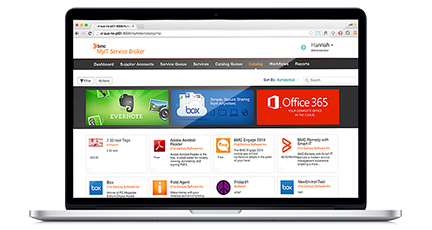
The good news is that BMC is out front with new digital apps such as MyIT, SmartIT, and ServiceBroker. These innovative products have helped Remedy win despite strong competition from ServiceNow.  We will soon start a Remedy 9 upgrade project with a government agency that includes an order for MyIT ServiceBroker, BMC’s new app store.  The goal is to roll this out as an agency-wide Service Catalog. Other points include:

SMAC is agility driven, not cost driven. The cloud values autonomy, standardization, automation, and elasticity. For example, RightStar has used Salesforce.com for sales force automation since the company was formed more than 10 years ago. In that period, we have spent more than $250K on software subscription fees. Had we selected an on-premise software solution, we would likely have spent no more than $50K during that same period.

Yet, Salesforce was the right solution for us due to its ease of use, quick implementation, and integration with other applications. Most importantly, we are always on the current version, and the software has improved exponentially during that time. Agility, not cost is what matters.

In the age of the customer, drop IT from ITSM and replace with agile. CEO’s expect that CIO’s will simplify IT and mature ITSM is a way to deliver on that objective. The challenge is that IT has moved from becoming a service provider to a service broker, as empowered employees can easily bypass IT and order applications, mobile devices, and disk storage without IT’s knowledge or approval, and expect IT to support everything. Even ITIL has lost its luster, really its customer focus. DevOps is getting lots of the new attention now, with its own conference break-out sessions at the current Fusion itSMF conference in New Orleans. (We are in Atlassian’s booth).

In summary, IT must return to showing value without sacrificing agility or security. Start simply, adapt agile methods—and implement digital applications and processes when appropriate.

Posted in BMC, DevOps, Digital Engerprise Management (DEM, RightStar | Tagged , , , | Leave a comment

The “L” Word

DEM

By Dick Stark

Every chance it gets, ServiceNow (SNOW) reminds BMC, HP, and CA customers, that they have legacy products from legacy IT firms, and that soon Remedy, or fill in the blank, will die an ugly death just like Siebel Systems did at the hands of Salesforce. Siebel created the customer relationship management (CRM) business in 1993. Within five years, the company grew to $2 billion in revenue and was recognized in 1999 as the fastest growing tech company in history. Just a short six years later, Siebel sold out to Oracle, which left Salesforce virtually unopposed in the CRM space.

SNOW is “making hay while the sun is shining,” reminding prospects of the challenge of maintaining legacy IT systems, while touting the promise of cloud computing and ITSM as a service. Even more frightening to CIOs, is the threat that those companies that don’t modernize (or digitize) face competition from “disruptors” like Netflix or Uber who can quickly change the competitive landscape. And give credit to SNOW for increasing the value of ITSM. CIOs are now looking at consolidating applications using an ITSM platform as the centerpiece of the IT infrastructure—a value rather than a cost center.

What is BMC doing to turn the tide and compete as one of the “cool kids?”

Innovation. Although BMC was slow to move to the cloud, there have plenty of cool new products:

  • ServiceBroker, a storefront for any employee or customer facing on-premise or cloud services.
  • BMC HR, a comprehensive HR app with an extensive mobile component.
  • TrueSight Pulse/Intelligence, another new tool that gives instant performance statistics for websites.
  • MyIT, which is designed to improve the customer or end-user’s experience with IT.
  • Remedy 9 with SmartIT, a FaceBook like interface for Remedy; and Smart Reporting, which enables users to build custom reports with ease. Remedy 9 is built 100% on top of Java.  Of course, Remedy is available in a SaaS version, Remedy-onDemand,

Architecture and Adaptability is critical. Digital Enterprise Management (DEM) is BMC’s blueprint for companies seeking to transform into fast-moving, innovative enterprises able to seize the opportunities, and overcome the challenges, presented by the digital economy. The core elements of DEM are BMC’s four pillars of ITSM, aka Digital Serve Management, Digital Service Assurance (TrueSight), Digital Enterprise Automation (DCA), Digital Infrastructure Optimization (Capacity Optimization). The glue that holds everything together? Analytics, Orchestration, and Policy.

BMC’s ability to recognize the impact of the “L” word to their customer base and actually do something about it is impressive. Customers do have an upgrade path away from their legacy systems to more modern systems like Smart IT and MyIT. With Remedyforce and Remedy-onDemand, BMC has complete Cloud based offerings And, BMC, offers integrated solutions around service assurance and automation that far exceeds anything from SNOW. Automation of repetitive manual tasks such as server provisioning/remediation, can reduce costs and improve efficiencies, allowing IT to focus on more strategic initiatives as it becomes a true value center.

Posted in BMC, Business Management, Digital Engerprise Management (DEM, RightStar, ServiceNow | Tagged , , , , , , , , | Leave a comment

Closed-Loop Change Management

Closed Loop Change Management

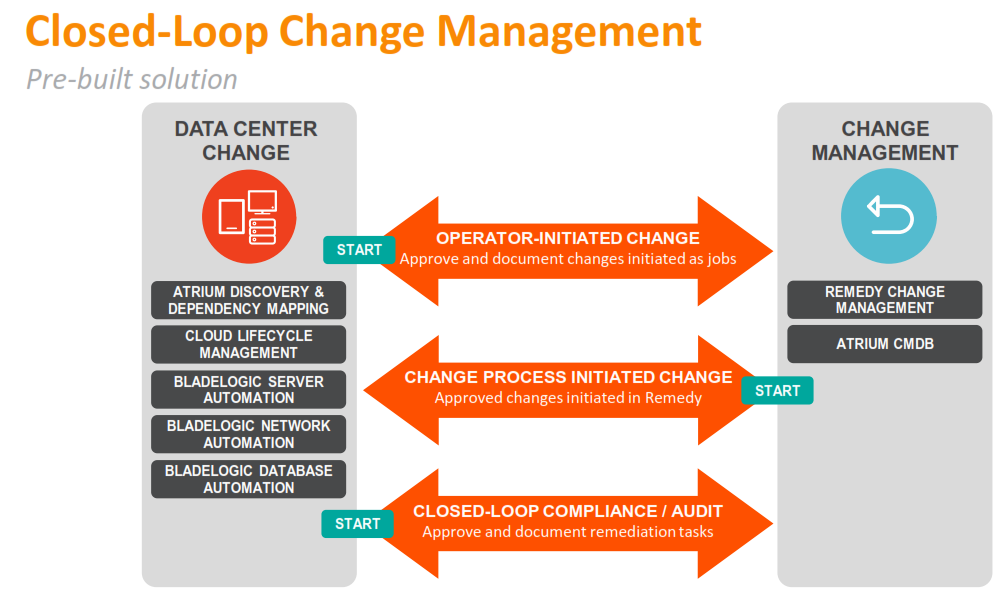
A much discussed topic at BMC Engage 2015 last month was Change Management, especially around automation and closure/change acceptance, also known as “closed-loop.” No surprise. Change Management is the most widely implemented process behind Incident Management, and BMC does closed loop better than anyone due to its automation capability and its Blade Logic Server Automation (BBSA) and Performance Assurance (TrueSight) product lines. So, how do organizations move up the maturity curve to take advantage of software capabilities they already own? Here are several case studies.

Liberty Mutual. Ray and Bob presented a case study about Liberty Mutual, a large BMC customer with the BMC suite of Service Management (Remedy), Service Assurance (TrueSight), and Infrastructure Optimization (BBSA) software. The glue connecting everything together: Atrium Orchestrator (AO). Since Liberty Mutual has 8000 networked devices and 25,000 servers, automation of repetitive manual tasks such as server provisioning/remediation can have an enormous impact on cost reduction.

With more than 65,000 change requests per year, Liberty is really getting their money’s worth out of their investment in BMC. A typical use case is auto-remediation of a server. Beginning with a Remedy incident, the request makes its way to AO, which opens up a change ticket. Once approved, the change ticket calls AO which directs the server remediation effort. Once complete the change request is closed off and the CMDB/CI is updated. Another important benefit is the reduction in MTTR.

DOD Organization. RightStar has worked with BMC Remedy and ADDM for over three years at Ft. Belvoir. There, we assist with the discovery and dependency mapping of components within their IT environment, identifying which IT components comprise enterprise applications and business services. Additionally, we map both physical and logical infrastructure interdependencies to the BMC Atrium CMDB by looking at ports, processes, and communications.

An interesting use case is the detection of “unauthorized” network equipment. When an unknown asset is discovered on the network, a check is performed to ensure that a change request was in place for that new asset. If not, an alert is sent for the asset manager to investigate. In this case, the loop is not closed, until a change request can be tied to the asset. An obvious benefit is the prevention of unauthorized equipment to the network and enforcement of the change policies.

The digitalization of everything is quickly changing long established business models, e.g. Uber, and within IT, digitalization may mean a more agile “digital by default approach.” Despite the waning interest in ITIL, these new business and organizational models, combined with the new ways of buying, owning, and operating technology, mean that ITIL process such as Change Management are more important than ever.

One thing is certain: IT is becoming more and not less complex so continuous service desk process and technology improvement will return significant value to the organization. The result: fewer outages, reduced costs, increased agent and employee productivity, and overall, improved customer satisfaction.

Posted in BMC, ITIL, Remedy, RightStar | Tagged , , , , , , , , , | Leave a comment

The ITSSM Gartner Magic Quadrant 2015 Edition

By Dick Stark

Magic Quadrant for IT Service Support Management Tools

Many of you have already seen the August 26, 2015, Gartner Magic Quadrant for IT Service Support Management Tools. In this report, Remedy continues in IT’s holiest of holy places, the upper right corner. Last year’s report clearly gave the top spot to ServiceNow (SNOW), a position held by Remedy from November 2010 to August 2014. This year’s report arguably shows Remedy and SNOW tied for first place although Remedy scored higher marks in technology and strategy. The timing of this news could not have been better with Engage 2015 just two weeks later. There are many bright spots, but also much work ahead for BMC as SNOW remains a formidable competitor. For instance:

BMC is still the market share leader as a result of its many ITSM platforms (Remedy, Remedy on-Demand, FootPrints, Remedyforce, and Track-It!).

Remedy is making a strong comeback. BMC is not going to allow SNOW to eat its lunch forever and is starting to regain its mojo. For example, Remedy 9 is a big hit, as is Smart IT, a new FaceBook like front-end for Remedy, now on its second major release. Even better, BMC learned from its award winning MyIT, that users feel they have paid enough for Remedy. So, Smart IT is free. The good news is that the Gartner evaluation pitted SNOW’s latest release against Remedy version 8, which means there is lots of room for improvement in the ITSSM 2016 Magic Quadrant.

SNOW is everywhere and doing everything. With its huge sales and marketing force, SNOW is invited into every deal. Two years ago, SNOW CEO Frank Slootman remarked to a group of analysts, “Our customers are actually frustrated because it’s tough to negotiate with a vendor who doesn’t have much competition.” This was borne out by the Gartner caution, “ServiceNow’s customers find it difficult to negotiate favorable contractual terms.” For customers that are price sensitive or looking for good value, there are other less expensive options like Remedyforce and FootPrints.

BMC’s mid-market strategy is confusing. All Engage product presentations made it clear that Remedy was BMC’s enterprise offering, and Remedyforce, BMC’s mid-market offering. And it is true that MyIT and other products like TrueSight and BPPM integrate well with BOTH Remedy and Remedyforce. BMC executives assured the attendees that FootPrints has a bright future as a strong all-in-one mid-market on-premise solution with a defined roadmap for future enhancements and growth. The message from BMC sales is to lead with a defined ITSM solution. Do not present multiple solutions and let the prospect decide.

What’s significant is that no one disagrees about Remedy’s position as the most fully functional ITSM solution available, period. SNOW excels because of its entire ecosystem.

This means that there is plenty of life left in BMC and its family of ITSM solutions, and continued opportunity ahead for RightStar with Remedy, Remedyforce, and FootPrints.

Posted in Business Management, ITSM, Remedy, ServiceNow | Tagged , , , , , , , , , | Leave a comment

Report from Engage 2015

By Dick Stark

BMC’s annual user group conference, Engage, wound down last Friday in Las Vegas. Attendance was up this year by 15% with more than 2000 customers, partners, and BMC employees in attendance. Nancy Donnelly and I presented: Remedyforce, FootPrints, and Remedy, Moving from Survivors to Thrivers. Here is a short Engage 2015 update.

The champagne corks were popping as BMC touted the newly released ITSSM Gartner Magic Quadrant in which they received improved scores related to technology, vision, and strategy relative to SNOW. What’s even more remarkable is that this evaluation pitted Remedy v8, not v9, against SNOW’s latest version. Significant new BMC announcements around its new Digital Enterprise Management Architecture (DEM) included:

  • MyIT ServiceBroker, a storefront for any employee or customer facing on-premise or cloud services.
  • BMC HR, a comprehensive HR app with an extensive mobile component.
  • TrueSight Pulse/Intelligence, another new tool that gives instant performance statistics for websites.

Deloitte and DISA won the Customer Success Story of the year for excellence with ITSM and BladeLogic Server Automation (along with closed loop change management).

RightStar customer Subway presented a session entitled, Subway Supports More than 40,000 Stores Using BMC FootPrints Service Core and BMC Client Management. Subway is up to 44,210 stores now and opening 50-100 every week. In his presentation, subway called out RightStar three separate times, praising our technical expertise and support.

Nancy at Engage trimmed

Nancy on Stage at Engage

More than 50 people turned out for our presentation on IT value. We surveyed our customers and reported on the real and perceived value they receive from their ITSM systems and processes. RightStar’s mission is to be our customers’ expert advisor in the ITSM space and return value to their organizations; it is good to know that most of our surveyed customers care about improving customer satisfaction and value.

Everyone I talked to agreed that BMC has come a long way in a year and that Engage 15 was well worth the time and money. The sessions, networking, venue, food, and venue were all excellent. I look forward to Engage 16 next September 6-9, again in Las Vegas.

Posted in BMC, Digital Engerprise Management (DEM, ServiceNow | Tagged , , , , , , , , , | Leave a comment