
Baking SAM into Your ITSM Strategy

By Dick Stark

Cake

Last Wednesday, I hosted an Aspera webinar, “Baking SAM into Your ITSM Strategy.” Software License Management is a hot topic and Aspera offers purpose-built, advanced license optimization tools that go beyond traditional asset management functions.  Can you have your cake and eat it too? Here is a brief summary of that webinar.

At the beginning of any webinar, RightStar polls the audience. For the Software Asset Management (SAM) webinar, we asked several questions around the topic of software audits and discovered that 43% had experienced an internal or external audit, and 29% had to pay fines or back maintenance as a result. This means that real pain exists due to the complexity of keeping one-step ahead of the auditor. Of course, the obvious question is why Aspera?  Don’t traditional software discovery tools such as SCCM or BMC’s BCM combined with ITSM asset management modules provide a total solution?

The answer is not entirely. First, Aspera is not a discovery tool and relies on existing data repositories that most organizations already own and populate. Aspera’s SmartTrack consolidates all software inventory and usage, maintenance and support, and licenses used and owned in a single system, including purchase history, use-rights, and metrics.  Traditional tools such as Remedy’s Asset Management module focus on keeping an inventory of hardware and physical assets.  The terms of the licensing are overlooked.  Software vendors utilize a license metric to determine how many licenses are needed for an enterprise’s use of a particular product, such as: per user, per device, per CPU, per installation, or some other combination of technical information.

Determining if enough, or too many licenses have been purchased requires a full understanding of the licensing terms and the changing dynamics of usage in the organization. Aspera utilizes its own “SKU Catalog” to document and link software entitlements in use. This catalog contains records from more than 170 software publishers for more than 300,000 unique SKUs.

Second, an optimization & simulation module (OSM) for SmartTrack moves beyond Software License Optimization to create financial analyses of the licensing costs of server software based on the licensing mode and the relevant infrastructure. That model can automatically answer business questions regarding the monetary benefits of SAM activities. For example, when consolidating a datacenter, carefully consider the potential software license impact.  It is possible to see a savings in hardware costs be eaten up by increases in the licensing costs.

The larger the business, the larger the potential savings – Aspera’s Co-founder, Bernhard Boehler reported that he has seen surprise audit bills as high as $50M.  The good news: RightStar is involved in several Aspera opportunities including a large proposal into a government agency. Because software is so important to large enterprises, and because the ROI on an Aspera investment is so high, I am optimistic about significant growth  in the Software License Optimization space.  You can have your cake and eat it too.

Posted in Business Management, Remedy, RightStar | Tagged , , , , , , , , , | Leave a comment

ServiceNow’s Knowledge 15 Event

kn15-logo

By Dick Stark

This past week, ServiceNow held its annual Knowledge event, attracting more than 9000 attendees.  I tuned in to the live webcast, which was keynoted by ServiceNow CEO and President, Frank Slootman. What’s the next big thing?  The following is a brief summary.

Based upon the keynote, ServiceNow (SNOW) is doing extremely well: $683M in revenue in 2014, which if their growth continues, makes them a $4B company by 2020. Even more impressive: SNOW reported more than 450 new customer go-lives in 2014 (more than one per day,) which Frank Slootman pointed out was more than all the other ITSM companies combined.  Is this really good sales and marketing or are they that much ahead of the competition?

Well for starters, Frank did not discuss anything too earth shattering. His list included:

  • Structured Workflow. Simplified, this means no more email requests, e.g., iPhone orders. At SNOW, employees can order iPhone using a simple request management module. (It made me wonder why SNOW doesn’t have a BYOD phone policy. What employee wants to use a company provided phone anyway?)
  • Real-time Analytics. This is important and much welcome announcement, but Salesforce has been offering this for years.
  • Market Dynamics Yes, we all want to have a Uber or OpenTable experience with IT, but other than structured workflow, there was little discussion about what SNOW is really doing to make this a reality.
  • ServiceNow Express,This is a new offering that shipped at the end of 2014. I like the easy button approach to upgrade to the Enterprise version if necessary. However, SNOW Express is flawed from the start. How can SNOW take their enterprise application and make it a mid-market product? Not all the pieces will scale. It is like saying United Airlines is going to try to compete with Southwest by offering a stripped-down budget airplane offering. (Called TED, United tried this but it failed.)
  • Out-of-the-Box Apps. Especially, easy-to-implement applications like Finance, HR, On boarding, Legal, and Facilities. Non-IT is a very big push.
  • New App Store. SNOW has an app store with 81 partner-developed apps. They are a long way from the SalesforceAppexchange, but it is a very good start.

Is BMC toast?  Not hardly. There are still plenty of bright spots ahead for BMC.  For instance:

Remedy is making a strong comeback. BMC wasted no time in releasing Smart IT, a new FaceBook like front-end for Remedy.  (Released last October, version 1.1 is just weeks away.)  Even better, Smart IT is free.

BMC’s MyIT already offers an “Uber” experience, with little customization. One of our consultants is working on a BMC job for a large retailer.  That retailer is consolidating its service desks and moving all to Remedy. One of the service desks is a SNOW based field service desk that relies on a Google-embedded GPS app to track field technicians. Due to the cost charged by Google, the application was overly expensive.  MyIT, a self-service app that uses location, role, and preferences to guide employees to the answers and tools they need is GPS enabled out of the box and a much better fit.

Of course, SNOW’s growth rate is impressive, but I didn’t hear anything as innovative as Smart IT or MyIT. For that reason, I continue to be optimistic about BMC and its ITSM/BSM family, and see opportunity ahead for RightStar with Remedy, Remedyforce, and FootPrints solutions.

Posted in BMC, Remedy, ServiceNow | Tagged , , , , | Leave a comment

Report from BMC’s Exchange 15

BMCHeaderImage_800px_updated

By Dick Stark

BMC’s Exchange 15 held March 19, 2015 at the Mayflower Hotel in Washington DC. The event was well attended by more than 350 customers, prospects, and partners. Sessions throughout the day covered topics such as Cloud, ITSM, Data Center Automation, and Performance and Availability. Here are a few notes from the show.

Paul Appleby, BMC Executive VP, Worldwide Sales and Marketing, spoke about BMC in the new digital service world.  Users expect self-service anytime and anywhere.  They are used to mobile apps that have updates monthly instead of yearly.  He pointed out that the users expect a personalized experience from their IT department, similar to what they receive from Google or Amazon.

In regard to government, Paul discussed a cloud first policy, and other important needs such as cybersecurity, efficiency, and ease of doing business. Paul was optimistic about BMC’s direction especially in regard to MyIT, v2.0 and SmartIT which provides a Facebook like intuitive experience. He cited a BMC customer, Vodaphone as an account with more than three million MyIT users.

Next up was the keynote speaker, retired Admiral James Stavridis. He is author of several books and was the former Supreme Allied Commander of NATO.  He provided a very brief history of the past 100 years and in the end pointed out criticality of improved cybersecurity.

Regarding Cloud First, Stuart Ainsworth, BMC Federal CTO, and Tauf Chowdbury, USDA Architect, discussed transitioning ITSM on-Premise to the Cloud. BMC should soon receive approval from the Federal Risk and Authorization Management Program (FedRAMP) to operate Remedy on-Demand (RoD) in the cloud. The USDA sponsored BMC to achieve Authority to Operate (ATO), which authorizes BMC to provide RoD to government agencies. Amazon Web Services (AWS) is the FedRAMP compliant Cloud Services Provider.  For disaster recovery purposes, RoD is provisioned in two AWS availability zones in the East, which are more than 50 miles apart.

RightStar will exhibit at Engage 15, BMC’s worldwide user conference in Las Vegas in September and I’m looking forward to another excellent show.


Posted in BMC, Business Management, Remedy, Technology Trends | Tagged , , , , , , , | Leave a comment

LInking ITSM to Business Value and Maturity

By Dick Stark

RightStar just finished an internal project aimed at determining customer value—what processes have been enabled or improved using ITSM tools and is that improvement measurable in terms of improved efficiencies or reduction in the overall cost of service management?  To investigate, weset up interviews with ten FootPrints, Remedyforce, and Remedy customers ranging in size from small to large. Although there was room for improvement, especially around process consulting, overall the customers had a positive experience with RightStar. Additionally, most customers, despite their ITSM toolsets, operate at a relatively low level of ITSM maturity.

In a 2014 Gartner Study, “The IT Service Management Unified Framework: Linking ITSM to Business Value and Maturity,” Gartner introduced a new model, the IT Service Management Unified Framework—a single strategic view into the relationship between ITSM, delivery, maturity and business value.  The report begins by discussing organizations that use a bottom-up approach to ITSM, (what I refer to as the “necessary evil” concept), are not recognized by business stakeholders as providing value. ITSM should be part of an integrated IT strategy. The Gartner Report recommends:

  • Determining the maturity levels and IT delivery optimization model needed to deliver value.
  • Defining the business value before developing the IT service catalog.
  • Mapping the processes to service requirements.

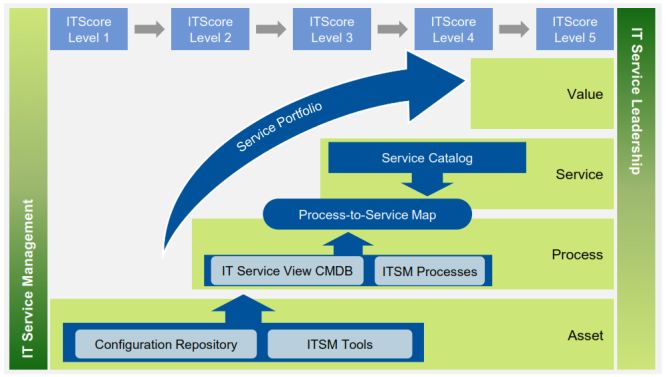
The Report introduces an extension of Gartner’s maturity model, known as the IT Service Management Unified Framework (ITSMUF.)  It provides a more in-depth road map for organizations looking to upgrade their IT maturity and delivery models. See below:

ITSMUF

Gartner is essentially saying that the old maturity model was not enough because it didn’t provide direction related to overall strategy and value. It is like complaining that the ITIL framework is not adequate because it doesn’t include work instructions. So, how does ITSMUF apply to customer implementations?

  • Process matters, but process linked to a defined IT strategy matters more. Using ITSMUF, customers should outline a strategy that takes them to a focused set of IT services with associated value statements.
  • All customers, no matter how small or immature, have a desire to move up the maturity model and drive real value. We can help them get there, by first mapping out an IT strategy and deploying tools such as Remedyforce in a phased approach. ITSMUF is a strategic guide to improve service delivery and provide real business value.


Posted in Business Management, FootPrints, Remedy, RemedyForce | Tagged , , , , , , , | 1 Comment

Remedyforce Winter 15 Update

By Dick Stark

On Thursday February 12, RightStar hosted a Webinar, “See What’s New in BMC Remedyforce Winter 15.” Remedyforce continues to improve and BMC is making it much easier and quicker for its customers to upgrade.  Because of competition from ServiceNow, Cherwell, and others, Remedyforce just keeps providing more value. One perfect example is the new chat module.  Just a few years ago, Chat was for cost add-on for Remedy users. The new release of Remedyforce includes a fully functional Chat at no extra cost.

The webinar provided several interesting statics on the value Chat provides to organizations:

  • Web Chat channel has become the channel of priority for more than 50% of service desks. The traditional telephone is the fourth choice of channel for generation X and Y.  (I still like to pick up the phone and talk to a human.)
  • According to the Help Desk Institute, in the last 4 years, fully-burdened cost per ticket (US data) for chat has come down by 20%. The fully-burdened cost for chat is 35% less than traditional channels like phone. A mixed-channel strategy provides an obvious opportunity for savings.

This was borne out for me this past week when the integration between my credit card and my personal finance software, Quicken, stopped working.  I looked for a number to call, couldn’t find one, so tried their Chat service. I quickly realized that I was chatting with someone far away, probably in India, and that he was multi-tasking, supporting several other customers at the same time. The result:  a wait of 30 seconds to several minutes after I hit the enter key.  Then, his responses back to me were pasted from a knowledge article and had little to do with my current issue.  After a half hour, I “hung up” with no resolution. This is why I prefer direct contact but I certainly understand why one person in India supporting three chat users at the same time is less expensive than a phone call to someone local.

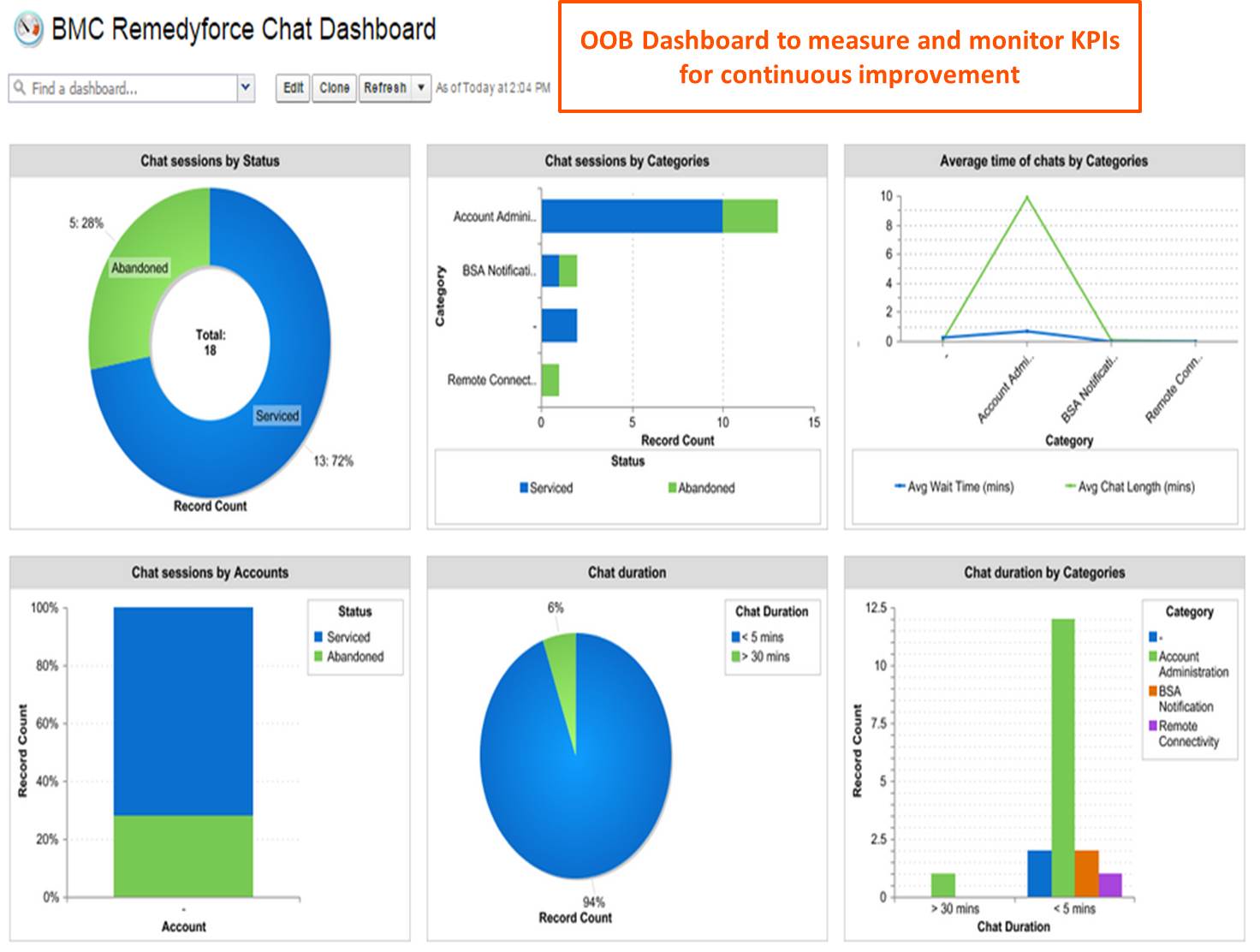
Remedyforce Chat

Clearly, what Remedyforce Chat offers is an opportunity for our customers’ help desks to provide a full featured service desk of voice, email, self-service, AND chat with the goal cost reduction and improved customer satisfaction.  Remedyforce Chat even offers a Chat Dashboard that allows organizations to identify if users are leaving before they are assisted, to review chat duration to understand staff involvement and conversation length, and to identify categories having higher abandon rates.

Other new features:

  • My Work Dashboard—Enables IT staff to easily see and take action on relevant work,
  • CMDB Dashboard—Get insight into critical business services and supporting infrastructure.
  • Salesforce 1 Mobile App—Updates to incident management and new task management capabilities.
  • Configuration Migration—Easily migrate or copy configuration data from one environment to another.

Finally, what about availability?  BMC will begin pushing Remedyforce Winter 15 to Sandboxes starting February 27 and all Production ORGs should be updated by March 20.


Posted in Business Management, RemedyForce | Tagged , , , , , | Leave a comment

Survivors to Thrivers

By Dick Stark

In a recent IDC White Paper, “Moving Beyond the Costs and Risks of IT Friction,” analysts Joseph Pucciarelli et al., show that significantly reducing IT friction could drive a mind boggling $800 billion in net new GDP for 2013 to 2020.  According to the report, significant components of high IT friction include dissatisfaction with IT service delivery including IT help desk support and the ability to resolve IT help desk issues.

IT friction is not a new concept. I first heard of this in 2001 in an ad campaign that Peregrine Systems (a precursor to ServiceNow) ran claiming its ITSM software made significant improvements to reducing IT friction.  IDC defines IT friction as “a mismatch between the level of IT service required by the business and the level of service the business receives.” The results are reduced organization agility, service outages, delays in critical application development, slow response times, and poor user experience. According to the study, 40% of respondents said that IT failures have led to direct loss of revenue, with an average revenue loss of 9.6%

The good news is that some companies have recognized how to move beyond IT Friction.  Known as Thrivers, these companies use IT more proactively, or as Gartner would say, operate at a much higher maturity level. IDC defines Survivors as organizations that pursue business as usual. IDC points out that there are three ways for companies to reduce friction and become Thrivers: Focus on strategic, not tactical, IT outcomes; leverage 3rd Platform technologies (Big Data, cloud, Mobile, and social); and deploy automation tools and end user self-service technologies across the organization.  Although no ITSM tool set company is specifically called out, this report makes clear the mission critical nature of ITSM.  Often, relegated to a necessary evil, ITSM and a solid IT infrastructure plays a critical role in revenue generation, risk mitigation, employee productivity, and cost efficiency. How can RightStar reduce IT friction?  Here are several examples:

MyIT trimmed

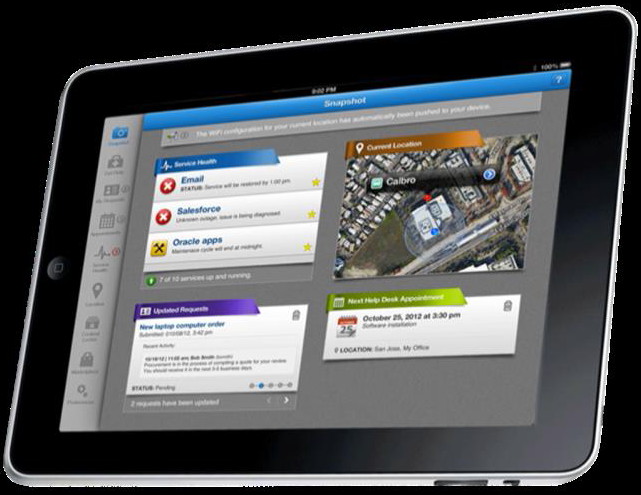
Service Catalog/MyIT. IT’s goal should be to make provisioning a laptop or cellphone as easy as ordering a book from Amazon. BMC’ s MyIT empowers end-users to ensure they always have access to the right technology and support services, no matter where they are and from one easy to use app.

Automation. BMC’s BladeLogic Server Automation (BBSA) enables consistency and compliance by automating processes like patching, configuring, updating and reporting. Similarly, with BMC Client Automation, IT has an accurate and current inventory of hardware and software, along with the proper software and security policies.

SmartIT replaces the current Remedy user interface with one that is more like Facebook–more collaborative, designed for mobile first.  It is a persona-based approach with specific roles such as first and second line techs, field support techs, and service desk manager.

I hope that ITSM will now start to receive the respect and investment dollars it deserves.  It is our job at RightStar to reduce IT friction and work hard to move our customers from Survivors to Thrivers.

Posted in Business Management, RightStar, Technology Trends | Tagged , , , , , , | Leave a comment

Increasing Customer Value with ADDM v10.1

By Dick Stark

On Wednesday, RightStar and BMC presented an excellent webinar, “ADDM: What’s New v 10.1, How to Tame Your Discovery Data and Increase Your Value to the Business.”  ADDM v10.1 was released late last year with several significant improvements over the prior release including: storage and load balancer discovery, big discovery (faster scanning), and improved data mining.

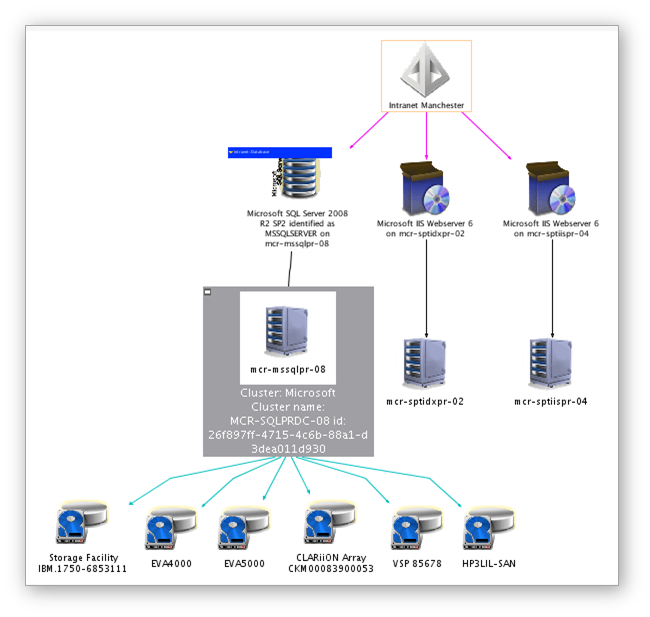
ADDM v10.1

The line is now starting to blur a little between monitoring, and discovery and data mapping. For example, ADDM not only identifies what’s in the data center, or on the network, but how applications are mapped to related software and hardware.  If monitoring software such as BPPM detects a slowdown or outage with an application such as SharePoint, then ADDM provides the relationships to the OS (Windows), CPU, RAM, IP, and MAC software instances and network devices.  Without the mapping, it could take much longer to pinpoint the real cause of the problem.

Given that ADDM populates data into the Atrium CMDB, organizations can also populate the CMDB with data collected from SCCM as well as manually such as from barcode scanners to reconcile data such as physical locations—sites, floors, and rooms.

Additionally, at one particular DOD customer, RightStar fully integrated ADDM into the CMDB. Using ADDM, all newly discovered, newly removed (not seen for a minimum 7 days) and changed (moved) assets are tracked and compared to see if a Change Request was indeed created for these installs and moves. If a Change Request was not created, an alert is sent to the administrator to investigate. The result is not just improved asset management effectiveness and a reduction in cost, but risk mitigation when making changes due to a better understanding of the change and its impact to the affected underlying infrastructure.

RightStar has already tested out the new ADDM Storage Discovery (requires additional licensing) and is thrilled with its capabilities.  For example the previously mentioned customer, like most DOD agencies, has strict policies about data retention on decommissioned disk drives. Those drives must be destroyed whenever the computer is to be put on a different classification network. Previously, the customer had no way of knowing whether the required disk action had occurred.  Now, they have access to each disk by serial number.  Additionally, with some configuration work, we have set up a closed loop change request to ensure that the proper disk was destroyed or decommissioned.

The RightStar webinar also pointed out several other new features of v10.1: big discovery, which provides faster discovery for large datacenters, and improved analytics.  ADDM customers can slice, dice, and analyze data right in the user interface.

Posted in BMC, Technology Trends | Tagged , , , , , , , , | Leave a comment

Predictions for 2015: ITSM Disruptors

By Dick Stark

BMC’s Anthony Orr, and Pink Elephant’s George Spalding, presented a webinar last week, Predictions for 2015: ITSM Disruptors.  Their presentation although interesting, was somewhat disjointed with most of the time spent on stories about new technologies such as wearables, like LG’s new GPS KrizON bracelet  for kids, devices and sensors, smart homes, intelligent projectors, and of course the mind numbing internet connections, now referred to as the Internet of Things (IoT). The webinar spent little time on how new technologies will actually disrupt ITSM, the response or fix, and IT or BMC’s solution. Here are my webinar takeaways.

Internet_of_Things

We are digital users and it is a mobile world.  For millennials especially, it is all about what’s on a mobile device.  All organizations from Coffee Shops to Banks, need to adapt. Fortunately, BMC has MyIT which allows mobile device users to submit and check trouble tickets as well as view knowledge articles. And problem solving is made easier because GPS enablement means location specific issues may be rapidly identified.

Gamefication is becoming more popular as a learning tool. Studies have shown that students retain as much as 75% when training involves actual simulation experiences.  Likewise, gamification as applied to the service desk provides a “fun” and interesting way to motivate technicians. By collecting points, prizes can be awarded, for example, for writing knowledge articles. The end result is a more efficient and productive service desk.

Focus on the customer and business outcomes.  George gave several specific examples already in place.  Bridgestone has a tire program that lets commercial tire users such as bus companies pay by the mile–that way customers only pay for the rubber that they use.  Airline engine manufacturers have a similar program that charge airlines by engine hours. Of course, BMC offers Remedy onDemand and Remedyforce on a pay as you go approach.  It’s difficult, however to get a true pay as you go approach as there is no method to charge for “seasonal” usage.  Even, more “out of the box,” why not charge for business outcomes, like reduced calls to the service desk.  If MyIT (premium), for example, reduces the call numbers or duration, why not charge list price.  If there is no improved business outcome, then allow customers to return the software

Keep track of everything. Certainly, the proliferation of Bring Your Own Device (BYOD) and its cousin, Bring Your Own Application (BYOA) creates challenges for IT departments along security and configuration management lines. Combine that with on-site and cloud based company and personal data back-up facilities, and an organization’s data could be all over the place.  This is an area where the combination of mobile device management, along with mature enterprise wide configuration and change management can make a difference in data segregation and security, especially between personal and company owned devices.

One thing is certain, ITSM disruptors means IT is becoming more and not less complex, and IT organizations need to continue to improve capability, performance and customer satisfaction.

Posted in BMC, ITSM, Technology Trends, Uncategorized | Tagged , , , , , , , | 1 Comment

BMC, Still the Market Leader

By Dick Stark

In case you haven’t seen the August 25, 2014, Gartner Magic Quadrant for IT Service Support Management Tools, report, Remedy has remained in IT’s holiest of holy places, the upper right corner.  However, the top spot now belongs to ServiceNow (SNOW), a position held by Remedy since November 2010 to August 2014.  It was a good run, and it is far from over as there are still plenty of bright spots ahead for BMC.  For instance:

BMC is still the market share leader with 38% market share with all ITSM platforms (Remedy, Remedy on-Demand, FootPrints, Remedyforce, and Track-It!) as compared to 19% for SNOW.  This is according to ITSM University, in Release 11 of its State of the IT Service Management Market, which was just released last month.

Remedyforce is coming on strong. I mentioned previously when I talked to so many of our Remedyforce customers how satisfied they were with Remedyforce.  At Salesforce.com’s, on-line AppExchange, Remedyforce holds a 4.2 out of 5 overall rating. Even more astonishing is the rating Remedyforce received in the State of the ITSM Market.

RemedyForce logo 1

That report rates Remedyforce in third place overall, behind SNOW and Remedy, and ahead of HP Service Manager, Frontrange HEAT, and CA Nimsoft.  From the State of the ITSM Market, “Remedyforce is built on Force.com, therefore it is built on arguably the best SaaS application architecture available. Remedyforce is one of the most promising upcoming solutions in this market.”

Remedy is making a strong comeback. BMC is not going to allow SNOW to eat its lunch forever and is working hard to get its mojo back.  For example, BMC wasted no time in releasing Smart IT, a new FaceBook like front-end for Remedy.  (Smart IT’s conception to release spawned only about six months which is an amazing accomplishment.)  Even better, BMC learned from its award winning MyIT, that users feel they have paid enough for Remedy.  So, Smart IT is free.

RightgStar has already validated that Smart IT should be a big hit.  We are working with an existing customer, a Smart IT early adopter to figure out how to roll this out. (The customer’s main complaint, that Smart IT is not customizable, will be fixed in the next release.)  Early feedback is very favorable: more functionality with fewer clicks and forms, better leveraging of collective knowledge, and improved mobile user functionality, especially when paired with MyIT.

What’s significant is that no one disagrees about Remedy’s position as the most fully functional ITSM solution available, period. The ITSM Market Report rates Remedy a sold 5.0.  SNOW by comparison, rates a 3.0, which is the same rating assigned to Remedyforce.  SNOW excels because of its entire ecosystem. From Gartner, “SNOW has a strong, highly effective sales and marketing capability that has attracted many customers and driven its product into most of the ITSSM RFP shortlists.”

This means that there is plenty of life left in BMC and its family of ITSM solutions, and continued opportunity ahead for BMC (and RightStar) with Remedy, Remedyforce, and FootPrints.


Posted in BMC, FootPrints, Remedy, ServiceNow | Tagged , , , , , , , , | Leave a comment

Don’t Install ITIL

Cake

By Dick Stark

RightStar held its third annual BMC Remedy User Group Meeting in Washington DC on Friday. It was a well-attended event, with most there to learn more about Smart IT and the new BMC.  My job was to introduce the speakers and to discuss what I learned at Engage, primarily for those not able to make the trek down to Orlando.  One of the Engage sessions I enjoyed the most was, “Let’s not Overthink ITIL,” which was led by BMC.  Here is a short summary.

Is it possible to have too much of a good thing?  BMC began with a quote from a customer, “We failed twice with ITIL. First, we tried to implement 13 processes at the same time and it did not work. Then we scaled it to nine. Finally we focused on the processes that would impact the business and we are getting traction.”  The quotation reminded me of a recent conversation with an executive about ITIL.  Thinking he was an ITIL “bigot,” I offered additional ITIL training, especially simulation training.

His response was that he had enough training, but all he needed was to implement ITIL.  Since ITIL is a framework, I pushed back, knowing that an attempt to “install ITIL,” would probably have a similar fate as the above-mentioned BMC customer.  Instead, here are my recommendations:

  • Start with a baseline. Most organizations are at a maturity level of less than three. This executive was just getting iPhones, Androids, and iPads for his organization, which assumes a higher level of maturity and innovation.
  • Zero in on the up-front pain points. Are assets leaking out of your organization? What about service request management? At a current RightStar customer, it took more than four weeks to get an account set-up so one of our consultants had access. This is unacceptable and suggests a huge issue with provisioning.
  • Low hanging fruit. Eighty percent of incidents are caused by poor Change Management. Maybe a focus on Change will significantly reduce calls to the help desk.
  • Quick wins in round one mean we can come back in round two. If Change is working, focus on service catalog, or an “Amazon-like” experience for provisioning of everything from printer cartridges to new employee on-boarding. When done properly, this provides a rapid ROI and visible organizational success.

By using the ITIL framework, IT organizations can deliver technology services better, faster, and cheaper while improving customer satisfaction. It is like making a cake. By combining ingredients that are separately not very tasty, e.g., flour, baking powder, eggs, cooking oil, and water, you can end up with an outstanding end-product. Of course, if you are not, careful and don’t know what you are doing, you can end up with a cake that is “half-baked.”

Remember it is possible to have too much of a good thing. Focus first on those areas that will have the most impact to the business. You can have your cake and eat it too.
Posted in ITIL, ITSM | Tagged , , , , | Leave a comment