Overcome ITSM Adoption Challenges

By Dick Stark

ITIL Simulation Training

We are currently working with a RightStar customer to help re-engineer their FootPrints system to make it better. And last Wednesday, I interviewed a Remedy consultant working at a government account.. When I asked about their ITSM implementation, she responded that there was room for improvement. The culprit in both cases? Poor user adoption.

To understand better how RightStar can make a difference in this regard, I reviewed a webinar, “Overcoming the challenges of ITSM Adoption,” hosted by George Spalding, Executive VP Pink Elephant, and Anthony Orr, former BMC Director, Office of the CTO. Interestingly, they began with a poll question: Why are organizations challenged with ITSM adoption? The results:

  • Partners        2%
  • Products       5%
  • Processes      28%
  • People          66%

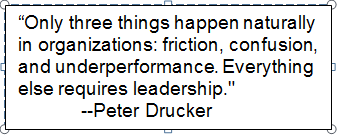
This is an astounding statistic and reminiscent of the quote form Management guru Peter Drucker, “Culture eats strategy for breakfast.” Yet, RightStar spends 95% of its implementation consulting time on products and processes, and very little time on people. What gives?

To fix user adoption, it is essential to understand what motivates people. According to George Spalding, people do what is necessary to get positive feedback and bonuses. People are natrually resistant to change and tend to move in the direction of “safety.” In other words, there is an intersection between the needs of people and the organization. That is the “safety point,” when people won’t take on the risk of new ITSM processess or systems. It is the old adage, “no one ever got fired for selecting IBM,” or “if it ain’t broke, don’t fix it.”

Of course, most ITSM systems and processess are broken and it is up to us to fix things. ITIL, by itself is not the answer, and a toolset such as Remedyforce is not necessaily the answer either. Recently a cutomer moved from SDE to Remedyforce. Shortly after implementing Remedyforce, we received an email saying, “we tried Remedyforce and don’t like it. What else you got?” Fortunately, we had FootPrints to offer….

How does RightStar overcome these challenges? Here are several suggestions:

    • First, we are not wrench turners, we are consultants. When the customer says, “This is stupid,” it is up to us to respond, “Trust me, this will be better in the end.”
    • Go for quick wins. Don’t try to implement all ITIL 26 processess at once. Look for one or two processess and put all effort there.
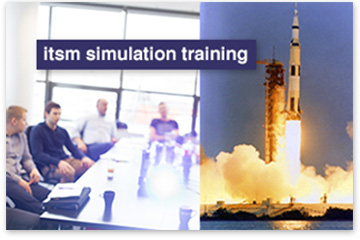
    • Education and simulation training. Since the biggest challenge is the people, why not focus on training. The Apollo 13 simulation exercise is an excellent way to kick-off any project as it help people change the way they looked at ITSM. Who thought ITIL could be fun?
    • Measurement and validation. Work on improvements in reporting, or for those more serious, look at ITSM benchmarking from MetricNet.
Peter Drucker Quote

Posted in Business Management, FootPrints, ITIL, ITSM, Remedy, RemedyForce, RightStar, Technology Trends, Uncategorized | Tagged , , , , , , , , , | Leave a comment

BMC Innovation Day

Transform IT

By Dick Stark

Last week, I attended BMC’s Innovation Half-Day at the National Press Club in Washington, DC. This event provided insight and updates across BMC’s five pillars: ITSM, Workload Automation (Control-M), Datacenter Automation (BBSA), Cloud, and Service Assurance (TrueSight). While RightStar’s area of expertise is ITSM, we have experience in all BMC pillars.

BMC kicked off the event, by discussing digital transformation especially around citizen experience, operational processess, and government services. BMC quoted the 2015 Gartner CIO Agenda Report: “Diverse companies are already transforming themselves through new digital technologies and trends such as holograms, Google Glass, thinking machines and advanced approaches to analytics. For at least the next decade, deep technology-driven innovation will be the new normal for market leaders.” The result is disruptive new products, services and business models. Cloud, mobile, social, and information has moved front and center, and BMC has kept pace.

Coincidently, on August 18, 2015, BMC announced, Digital Enterprise Management (DEM), a blueprint for companies seeking to transform into fast-moving, innovative enterprises able to seize the opportunities, and overcome the challenges, presented by the digital economy. Business Service Management (BSM) is officiallydead. Long live DEM!

It turns out that the core elements of DEM are BMC’s four pillars of ITSM, aka Digital Serve Management, Digital Service Assurance (TrueSight), Digital Enterprise Automation (DCA), Digital Infrastructure Optimization (Capacity Optimization). The glue that holds eveything together? Analytics, Orchestration, and Policy. Remember the BSM spider diagram? The DEM diagram is much simplified:

DEM

BMC then discussed how ITSM will enable businessess to manage these digitial services. An important enabler is Remedy 9 with new features such as Smart IT and intelligent reporting. This was validated when I visited a RightStar Remedy customer this week. They are very interested in migrating quickly to version 9 due to the advanced analytics available out of the box, and mobile capabilities of Smart IT. That customer has mobile workstations throughout their hospitals that could mostly be replaced with iPads running MyIT.

The future looks even brighter. BMC then discussed Problem Management personas and a change calendar and impact analysis for Smart IT. MyIT Service Broker will be the hot announcement at Engage next month. Think it as a consolidator of services catalogs from multiple sources, providing users with a single self-service app for all their business needs.

Posted in Business Management, ITSM, Technology Trends | Tagged , , , , , | Leave a comment

RightStar Engage Presentation: Moving from Survivors to Thrivers

BMC engage logo

By Dick Stark

Nancy Donnelly and I will be joint speakers for a session at BMC Engage, BMC’s annual user conference to be held this year in Las Vegas, September 7-11. Our topic: Remedyforce, FootPrints and Remedy: Moving from Survivors to Thrivers, although most of the 500+ show attendees will be Remedy customers. A preview follows.

During RightStar’s 12 years in business we have worked with over 500 different Remedy, Remedyforce and FootPrints customers in a wide range of ITSM applications. Most customers have an ITSM maturity level of less than level three, and almost all customers fail to take full advantage of the their respective ITSM tool set.

When we talk with our customers about a service desk implementation and the value received, they often state that improvements in reporting is the biggest value-add. Good reporting allows customer to better measure their results. But what about improvements in customer satisfaction, reductions in the total cost of service management, and improved efficiencies? Is the service desk a necessary evil, or a necessary requirement for a company to move from a Survivor to a Thriver?

In early 2015 Nancy and I surveyed approximately 20 customers to determine why customers buy ITSM products and their perceived and real value. The four key takeaways of the study are:

  1. Customer Satisfaction continues to be the #1 goal for the service desk
  2. Lowering the overall cost of service management should be the #2 goal, but this isn’t the case
  3. Improvements in reporting is the most cited ITSM tool set benefit
  4. Contrary to IT provider beliefs, customers are excited about self service

Specific findings from the survey:

  • 60% of our respondents stated that implementing these solutions has resulted in:
  • An increase in the quality of data and reporting
  • Meaningful data is being captured for strategic decision making
  • 25% stated that implementing these solutions has resulted in:
  • Improvement in the amount of self-service interaction by their end-users
  • 100% of our respondents:
  • Do not track the cost of supporting their customers

Overall, there were very few surprises, other than no customer surveyed tracked cost data. In conclusion, our customers agreed that, the return on the ITSM investment is worth it, the risk is acceptable, and the ITSM toolset and a solid IT infrastructure play a critical role in revenue generation, employee productivity, and cost efficiency.

Posted in Business Management, ITSM, Remedy | Tagged , , , , , | Leave a comment

Report from Remedy 9 User Group Meeting

Dick at Rug

By Dick Stark

Last Thursday, RightStar held its fourth annual Remedy User Group Meeting. Held at the GSA Regional Office Building in DC, bmc discussed new Remedy features like Smart IT as well as the Remedy Roadmap. It was a well-attended event.

bmc began by discussing the digitial imperitive for ITSM. Digitial businesses deploy digital services and Remedy 9 along with Smart IT is “smart, beautiful, and powerful.” This new digitial imperitive also enables personalization, and coincidently that is the cover story of the July/August CIO Magazine. CIO 100 award winner Shankar Arumugavelu, senior vice president and CIO, Verizon Wireless, credits personalizaion to Verizon’s recent success: “Everything we do is putting the customer first. We’re putting a significant premium on personalization.” He continued, “IT has a unique vantage point. The entire customer experience comes together in IT, and we can provide the thought leadership required to bring personalization to life.”

Arumugavelu should be a spokesperson for bmc’s MyIT, which is designed to improve the customer or end-user’s experience with IT. MyIT can help provide faster, more personalized assistance because MyIT knows who and where they are.

Remedy v9

Whether IT departments are ready or not, it’s a BYOD world, with mobile devices such as iPhones and iPads proliferating throughout most organizations. iPads are quickly replacing notebooks, and even pen and paper. Additionally, employees expect an excellent customer experience whether from a bank, on-line retailer, or restaurant, and expect the same thing from their IT department. The good news is that unlike Google, MyIT is purpose-built to transform the end-user experience, making them and the service desk much more productive.

bmc then discussed additional reasons why Remedy 9 is a winner:

Persona based user experience. Smart IT version 1.1 is standard with Remedy 9. Smart IT now offers user focused personas for Service Desk, Change, and Knowledge.

Context and location aware. Remedy 9 knows who you are and where you are, and it will present you information that’s relevant, whether you are a business user (MyIT) or IT user (Smart IT).

Smart Reporting. Arguably, the best new feature, Smart Reporting, like reporting inSalesforce, enables users to build custom reports with ease. Even better, users can share, follow, and comment on graphs and charts to get the whole team engaged in making better decisions.

Now, much improved and built 100% on top of Java, Remedy 9 offers the most innovative ITSM solution available. RightStar confirmed this in an “Ask the Expert,” session following bmc. We reported that in a just completed “bakeoff” between ServiceNow and Remedy 9, a large government agency selected Reemdy 9. It wasn’t even close.

Posted in BMC, Remedy, RightStar, ServiceNow | Tagged , , , , , | Leave a comment

Rogue ITSM?

Rogue IT

By Dick Stark

For the past twelve years, RightStar has sold ITSM solutions primarily into centralized IT Departments. These organizations have come to rely on ITSM toolsets such as Remedy, Remdyforce, or FootPrints to deliver technology services in a centralized approach. Occasionally, we sell into other departments like HR or Facilities, but only after approval from IT and in response to a request for application consolidation using an ITSM tool as the centerpiece.

With the advent of SaaS and other cloud based services, users are discovering the ease of, for example, “spinning” up a server, and testing and purchasing an application with no IT department involvement whatsoever. As a result, IT is quickly becoming a service broker, rather than a service provider. Rogue IT is here to stay.

In a recent ComputerWorld article, a survey of IT professionals said rogue IT projects are a fact of life in corporate America:

  • 90% said there are computer projects under way in their companies that don’t involve the IT department.
  • 58% said their companies have policies that bar significant IT projects from being undertaken without IT department approval or control.
  • 86% said IT products are being installed in their companies without the authorization or support of the IT department.

What about rogue ITSM? Of course outsourcers and MSP’s offer ITSM services such as L1 and L2 support, but the decision to outsource the service desk is typically made at the CIO level. Rogue ITSM is not yet realistic. Google and Microsoft Outlook are not yet very good substitutes for knowledge and incident management, and Amazon may not be the ideal substitute for a service catalog. These options may work well for individuals in a very small organization, but mid to large organization must continue to rely on ITSM processes and toolsets. This means the future of ITSM continues to look bright.

What about rogue IT for DevOps? As an Atlassian partner, we’ve discovered that rogue IT is common place in software development organizations, and especially with Atlassian and their family of DevOps, coding, collaboration, and tracking software tools. A software development team may realize that they require agile tools and processes in order to remain competitive. By swiping a credit card on the Atlassian website, they are “off to the races.” I recently talked to a VP of IT and he admitted that the company’s software development organization made a sizeable investment in Atlassian, but kept him totally in the dark. Because of social media and ease of implementation, Atlassian has grown to more than $200M in software sales. That is a lot of credit card swipes.

While rogue IT Atlassian users are growing like wildfire, IT is starting to take notice, especially in regard to:

Security. With the recent security breach headlines, people recognize that security is important and IT is the place go.

Collaboration. Collaboration with IT means successful projects. IT can assist with things like architecture, process design, and data redundancy.

The good news is RightStar is well positioned to assist both central IT and rogue IT with consolidation of their Atlassian processes and systems.

Posted in Business Management, DevOps, Technology Trends | Tagged , , , , , | 1 Comment

What is the Future of ITSM?

What is the fugure of ITSM

By Dick Stark

In April, EMA, an IT consulting firm, released a study, “What Is the Future of IT Service Management? Since the answer to this question is important to RightStar, I downloaded a copy. EMA surveyed 270 organizations with more than 500 employees actively engaged in ITSM. Fortunately, the answer was, “ITSM is more needed than ever as IT seeks to become a truly service-aware, business-aligned, enterprise-facing organization.” Let me share some specific findings as they apply to RightStar.

The practice of IT service management (ITSM) is to help deliver technology services better, faster, and cheaper. To succeed with ITSM, organizations rely heavily on fit-for-purpose ITSM tools such as Remedy, Remedyforce or FootPrints. The practice of ITSM (or ITIL) is sometimes viewed as a necessary evil, that frequently slows down IT decision making and problem solving. ITSM, however, should be viewed as a value center, aligned with the needs of the organization. Indeed, poor ITSM can lead to outages such as what caused the four hour shut-down last week at the NYSE, attributed to a “configuration issue.” Translated that could mean poor change or configuration management. At any rate, here are several EMA ITSM strategic findings:

Improved end-user experience, internal to the business. The most important metric for any service desk is customer satisfaction so ITSM tools and processes should focus on ways to improve the user experience. Of course, a well-designed service catalog should improve the user experience as long as it is easy to use. bmc’s MyIT, also focused on improving the end-user experience, is a purpose built mobile app for employees to search the knowledge base and submit and check on tickets. A high price tag initially scared off early adopters, but since the non-premium package is included at no charge, demand has increased.

Integrate ITSM and Dev Ops. The EMA study reported that ITSM and DevOps are coming together with a focus on scheduling, workflow, and feedback loops. One new RightStar customer asked us to integrate FootPrints to JIRA, presumably to link change requests in FootPrints to the JIRA work flow and development. The good news is that RightStar is now both a bmc and an Atlassian partner.

Improved Analytics, also known as “big data for IT.” During a recent customer visit, the IT Director was very concerned about benchmarking his metrics against other similar organizations as continual service improvement is a key success factor. Their acquisition spree of other hospitals means more work for their centralized IT organization. Having good metrics allows their IT organization to monitor progress.

Improved operations-to-service desk integrations. The report underscored the importance of integrating application and performance monitoring tools into a “more unified whole” than in the past. Proactive monitoring may help fend off network or application errors before they escalate into an outage such as that experienced by United Airlines or the NYSE.

What does the future look like? More not less ITSM tools, processes, and integrations. The end result– improved staff productivity, heightened quality of services, and reduced operational costs should make ITSM a value center, not a necessary evil.

Posted in Business Management, ITIL, ITSM, Technology Trends | Tagged , , , , , , , , , , | Leave a comment

Remedyforce Spring 15 Update

Remedyforce diagram

By Dick Stark

On Thursday, RightStar hosted a RightStar webinar, “See What’s New in BMC Remedyforce Spring 15.” Remedyforce continues to improve and BMC is making it much easier and quicker for its customers to upgrade.  Because of competition Remedyforce just keeps providing more value. One perfect example is Smart Suggestions.  Just like Remedy’s Smart IT, knowledge articles, templates, and broadcasts are automatically and intuitively suggested.

With Smart Suggestions enabled, help desk analysts have a quick and easy access to relevant information while working on an incident in the Remedyforce console. Analysts can view suggested knowledge articles, broadcasts, and templates that might be relevant to the record. They can browse the suggested knowledge articles, broadcasts, and templates, and link relevant records to the incident. The smart suggestions are displayed based on the description and category of the working record.  The obvious benefit is in the time it takes to resolve an issue, which translates to real dollar savings.  Other new features include:

  • Service Request Definition (SRD) Enhancements. The wizard to create SRD has been improved to make it easier for administrators to set up and create SRDs.
  • Remedyforce CMDB enhancements.
  • Segregation of incidents and service requests.
  • Remedyforce console enhancements.
  • New reports. Eleven new out-of-the-box reports are now available.
  • Remedyforce Configuration Data Integrity Tool. A new tool which has been added in to help administrators identify active templates, request definitions, suggested owners, and Service Level Agreements (SLAs) that reference data in other objects that has been deleted. For example, an administrator might have created a template that sets the assigned user to “Allen User,” but since the template was defined, “Allen User is no longer with the company. The tool uses the Remedyforce Utility Service to run a batch job daily at 12 AM to identify these impacted records. If an impacted record is found, an email with the Remedyforce Configuration Data Integrity report is sent to Remedyforce Administrators (users for whom the Remedyforce Administrator check box is selected.) This report lists active records that are impacted by deleted, modified, or unused (inactive) records in other objects

Finally, what about availability?  BMC began pushing Remedyforce Spring 15 to Sandboxes starting June 7 and all Production ORGs should be updated by the middle of July.


Posted in BMC, ITSM, RemedyForce | Tagged , , , | Leave a comment

What in the World is Control-M?

Control M 2

By Dick Stark

On Wednesday, BMC held a Control-M training session for the RightStar Federal team. The objective was to educate us about Workload Automation (WLA) and BMC’s Control-M, and to demonstrate the value that WLA offers customers. 

Although RightStar has focused primarily on IT Service Management, BMC offers solutions in other areas such as IT Operations (TrueSight), IT Automation (BBSA), and WLA (Control-M). Control-M has been around since the 90’s, and for most of that time has occupied the uppermost right-hand Gardner Magic Quadrant for WLA.

With recent security breaches at the IRS and now the Office of Personnel Management, computer and network security solutions are getting all of the attention.  WLA, however, is a necessary component of most large IT organizations, especially those with significant batch processing requirements. Batch jobs have been around since the early mainframe computer days.  (My first computer job was in 1978 for a computer billing company that ran batch billing jobs for hospitals.) Today, WLA provides a single point of control for definition and monitoring of background executions in a distributed network of computers across different operating system platforms and business application environments.

Control-M is not as sexy as other BMC solutions such as Remedy with Smart IT, or CLM, but the product sells very well to large accounts.  RightStar has had three Control-M customers, the largest being a DOD account, where we are looking at nearly a $2M expansion. What sets Control-M apart from the rest of competition?

Forecasting – Control-M offers predictive analysis so that job schedulers can forecast schedules and workload to prevent traffic jams.

No more scripting – The Control-M user interface replaces scripting. This eliminates the majority of non-standard code, reducing development time and effort.

Change Management – Control-M enforces site standards and change control to deliver applications faster and improve the quality of service.

Big Data, Hadoop, and Informatica – Over 90% of the workload that supports big data applications such as Hadoop and Informatica runs in batch mode, and Control-M is uniquely positioned to support these applications.

ERP applications – Similarly, ERP programs such as SAP require significant batch processing and Control-M provides an excellent fit for large, heterogeneous, IT environments.

Self-service capabilities, policy-driven workload management, predictive functionality, business impact analysis, and support for mobile devices and automation platforms are some of the key areas that differentiate Control-M from the rest of the competition. By offering a single pane of glass and a rapid ROI, Control-M can make a difference for organizations with large batch processing needs.


Posted in BMC, Business Management, RightStar | Tagged , , , , | Leave a comment

Metrics Matter

MetricNet Logo

By Dick Stark

If you want to find more oil, you drill more wells. If you want to secure more sales leads, you make more calls.  If you want to improve customer satisfaction and lower the overall cost of service management, you….

According to Jeff Rumburg, of MetricNet, during a presentation he gave at the Washington DC local itSMF meeting last Thursday, you “pay your L1 (remote) and L2 (desk side support) technicians more money.”  At least that is one of the many findings from his 2014 benchmark study of 138 organizations in 31 countries.  (This was an exhaustive study based on detailed survey results of dozens of metrics using his defined benchmarking methodology that he has fine-tuned over the past 25 years.)

Jeff reported that the two metrics that really matter are customer satisfaction and cost. He pointed out that most organizations strive to reduce the cost of service management and at the same time, increase customer satisfaction.  While these goals are not mutually exclusive, there is a diminishing return to customer satisfaction as the cost per ticket increases.  In other words, no organization can afford zero defects. Even more interesting, there is no real benefit to having an expensive ITSM toolset (over a less expensive ITSM toolset,) especially when combined with a low level of organizational ITSM maturity.

Jeff’s 2014 benchmark study determined the average cost per ticket of a L1 call to be $22, while the cost of an L2 call is $62.  L2 costs are always higher because upon the amount of travel time required to support the end user. Level 0 support, or self-service is only $2 per call, meaning that more mature organizations strive to “move to the left,” by focusing more on self-service or remote support. Organizations running their service and support as a business with a high level of customer satisfaction on average lose 17 hours of productive time per employee per year.  This compares with less efficient organizations that lose 47 hours of time per year.  Do the math and an organization that moves “to the right” on the customer satisfaction index, saves 30 hour of productive time per year per employee.  An organization with 1000 employees and an average salary of $80,000 per year saves 30,000 hours.  This translates to an annual productivity savings of $1.15M per year.

Jeff argues that by paying L1 and L2 techs more money, turnover declines, quality of support increases, and overall costs go down.  Here are other ideas to reduce costs and increase customer satisfaction:

Move to the Left. Whether you are a business user (MyIT) or IT user (SmartIT), BMC offers solutions that offer improved collaboration and self-service. For example, MyIT allows mobile device users to submit and check trouble tickets as well as view knowledge articles. And problem solving is made easier because GPS enablement means location specific issues may be rapidly identified.

Smart Reporting.  Arguably, the best new Remedy v9 feature, Smart Reporting, like reporting in-Salesforce, enables users to build custom reports with ease. Even better, users can share, follow, and comment on graphs and charts to get the whole team engaged in making better decisions.

More Options.  In addition to Remedy, BMC offers Remedyforce and FootPrints which provide excellent value and high customer satisfaction. Both scale to support medium to large customers.

Posted in Business Management, Technology Trends | Tagged , , , , , , | Leave a comment

Remedy Version 9: The Most Innovative ITSM Solution Available

Remedy v9

By Dick Stark

On April 29, BMC held a Remedy Version 9 webinar for its customers, quickly maxing out the 500 WebEx attendee limit, forcing those (like me) not able to login to settle for the pre-recorded version.  On April 30, Version 9 went G.A. and on May 19 BMC will host a Remedy 9 launch event, hopefully again with well more than 500 attendees ….

Hard to believe, but it’s been two and a half years since Remedy version 8 first debuted.Version 8 offered a totally revamped SRM and user interface with a best picture view and fewer fields on the screen. Chat and social media support were built-in. Now, much improved and built 100% on top of Java, Remedy 9 offers the most innovative ITSM solution available.  Here’s a few reasons why:

Persona based user experience. Smart IT version 1.1, also released April 29, is standard with Remedy 9. Smart IT now offers user focused personas for Service Desk, Change, and Knowledge.

Context and location aware. Remedy 9 knows who you are and where you are, and it will present information that’s relevant, whether you are a business user (MyIT) or IT user (Smart IT).

Smart Reporting.  Arguably, the best new feature, Smart Reporting, like reporting inSalesforce, enables users to build custom reports with ease. Even better, users can share, follow, and comment on graphs and charts to get the whole team engaged in making better decisions.

Mobile first. Remedy 9 offers the full experience on iOS, Android, and HTML5

A Change Request Wizard makes change simple. An on screen guide helps users be more productive by creating Change workflow faster.

A new archiving feature provides a way to remove obsolete records from the production database using a regular, controlled, and predictable process.

A new dev to production tool enables administrators to promote workflow customizations and data effectively and reliably across environments

New pricing. BMC announced last Thursday a new greatly simplified and revamped Remedy ITSM pricing model with much lower list prices.

Will our customers want to upgrade and what is the process?  According to an independent benchmark study, users with Smart IT were on average 79 seconds faster resolving calls.  This faster call resolution translates into a 75% increase in productivity.

Upgrading gets easier with each new release. Remedy 9 includes an interactive upgrade tool that guides users through the upgrade process.  Included is a new customization reconciliation tool that allows users to understand what has changed and easily make changes when conflicts arise.

Based upon our experience with one of our beta customers, Remedy 9 is a real winner.  They will go live as soon as Solaris is supported by BMC later this summer.

Posted in Remedy, Technology Trends | Tagged , , , , , | Leave a comment